Primate Blog Post.
Lemurs.
A.) Environment- Madagascar, in the southeastern parts of Africa.
B.) Body size and sexual dimorphism- they lack any sexual differences in size, but the color of their underfur is generally what can be used to tell the differences in sexes. Males tend to have a darker undercoat, while females have a lighter color in their undercoat.
C.) Expression/influences on their environment- Since lemurs are tree-based animals and spend most of their time in trees and swing from branches to get from tree to tree, their fur colors have adapted as to blend in easier to the trees in which they live as to avoid predators.
D.)

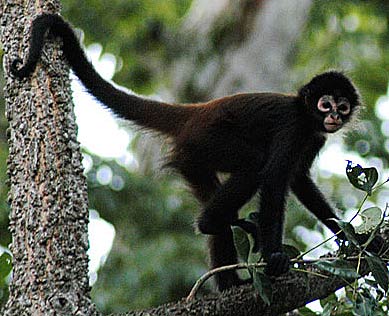
Spider Monkeys.
A.) Environment- mainly in the tropical rain forests of central and south America
B.) Body size and sexual dimorphism- very little, males are typically slightly bigger (an average male is 24 pounds, while females average at 21 pounds.)
C.) Expression/influence of the trait- since there is very little sexual dimorphism in spider monkeys, the environment does not play much of a role.
D.)
Baboons.
A.) Environment- the African grasslands.
B.) Body size and sexual dimorphism- males are very large compared to the females. Females also have estrus, a hormonally initiated period of sexual receptivity (which includes swelling and redness around the external genetalia) that also signals to males that the female is sexually receptive.
C.) Expression/influence of the trait- The larger size of the males gives them defense against predators, and also helps them fight for mates.
D.)

Gibbons.
A.) Environment- southeastern asia
B.) body size and sexual dimorphism- very little.
C.) Expression/influence of the trait- since there is very little difference, their environment has little influence on the sexual dimorphism.
D.)

Chimpanzees.
A.) Environment- western parts of Africa
B.) Body size and sexual dimorphism- Males average between 75 to 150 pounds, while females average between 50 to 100 pounds.
C.) Expression/influence of the trait- they have long arms and opposable thumbs that allow them to swing from branch to branch, but are large enough to defend themselves from predators if they are on flatland.
D.)

posted by Unknown @ 7:28 PM
2 Comments


2 Comments:
Since your last name starts with a "B", you should have completed the Locomotion trait. Assuming you used the first letter of your first name instead?
You have given the geographical locations of each primate. You needed to describe the environment (rain forest, savannah, desert, mountainous, etc.) in order to see the relationship between the trait and the environment.
"Lemurs" is a pretty broad group and there is a lot of variation in body size. Do you see any relationship between which lemurs are arboreal and which ones spend some time on the ground?
Okay on the Spider monkeys. Just because there is little sexual dimorphism doesn't mean the environment has little influence. It just means that sexual dimorphism isn't advantageous in their environment.
Good connections for the baboons regarding defense and attracting/controlling mates.
As with the spider monkey, if gibbons don't display significant sexual dimorphism (body color?), that only means it isn't advantageous in that environment to exhibit dimorphism. The environment still has strong influence.
Lost the topic for chimps... why do chimps exhibit sexual dimorphism in body size?
Missing summary? Good images.
Hi Savannah,
I thought your blog post was extremely informative, and very well written. I enjoyed reading the differences in each primate’s body size, and how their environment contributes to the differences. I feel like I learned a lot about primates after reading your blog. It was clear after reading about each primate that you really worked hard, and did the research necessary to answer the given questions, I very much enjoyed reading your blog.
Post a Comment
Subscribe to Post Comments [Atom]
<< Home